Midvale Foundation Pros
Wall Stabilization in Midvale, UT
Wall stabilization in Midvale, UT: steel anchors, carbon fiber straps, and I-beam bracing for bowing basement walls. Free estimates available.
- 15+ Years local experience
- 500+ Projects completed
- Licensed & Insured
Serving Midvale and nearby communities.
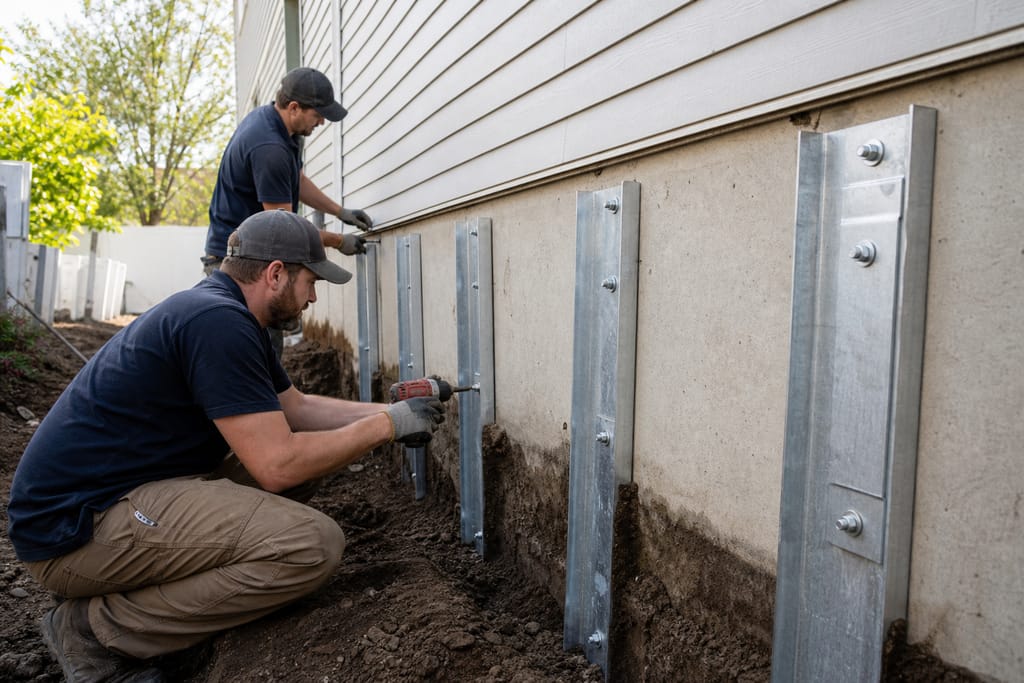
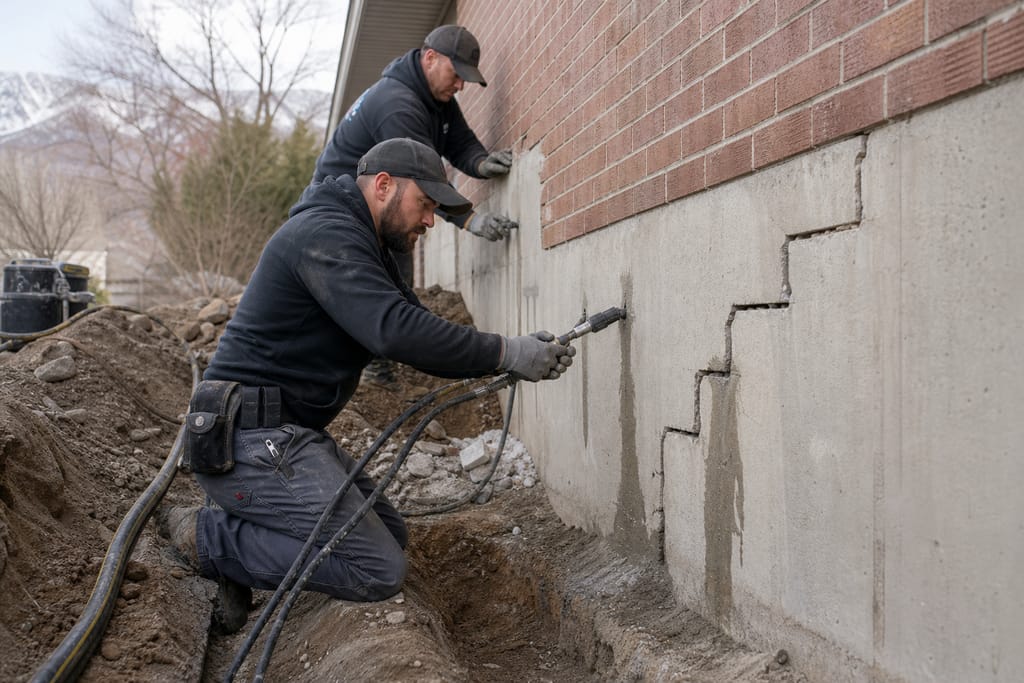
A basement wall that bows inward usually means hydrostatic pressure. Saturated clay soil is pushing harder against the wall than the wall can push back. Midvale Foundation Pros stabilizes bowing and leaning walls with steel anchors, carbon fiber straps, or I-beam bracing, matched to how far the wall has already moved.
Spring snowmelt is the usual trigger in this part of the valley. Water saturates the soil outside a basement wall. Pressure builds. A wall that held fine for years suddenly starts bowing or cracking horizontally. Catching it early is what keeps the wall anchorable instead of needing a full rebuild.
What's included
What's included with Wall Stabilization
Typically included: wall inspection and pressure assessment, reinforcement selection, anchor or brace installation, and tensioning to stabilize the wall.
Optional: epoxy crack sealing on the wall prior to reinforcement, and moisture barrier coating after stabilization.
Customer prep: clearing storage or furniture away from the affected wall and yard access near anchor points if wall anchors are used.
Want a clearer scope?
Get a Free EstimateHow it works
How our Wall Stabilization process works
 Step 1
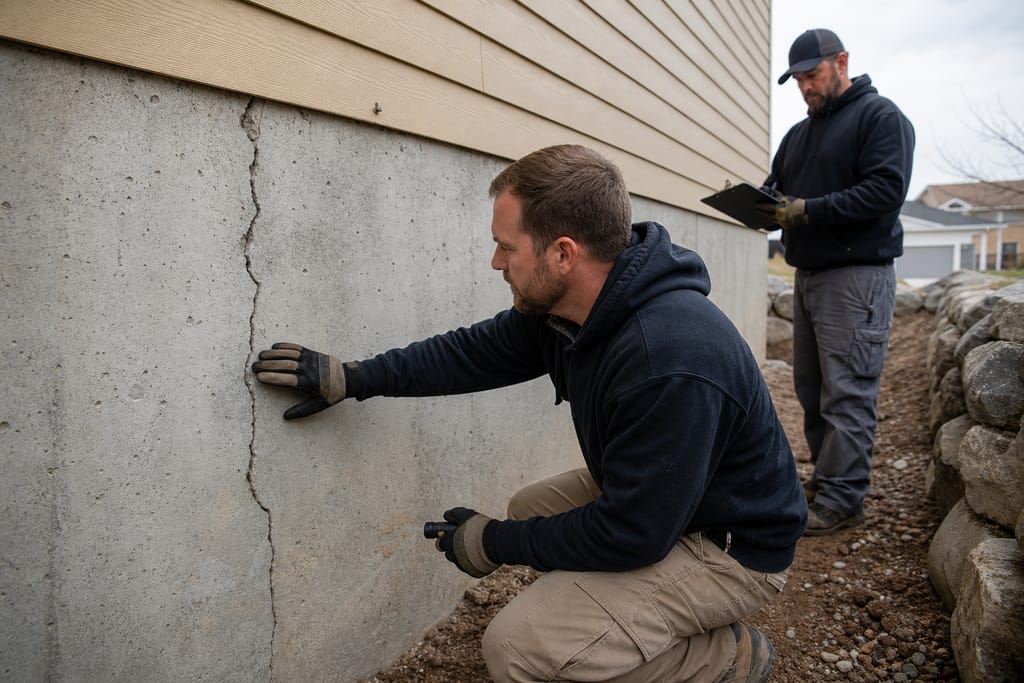
Wall Inspection
Walls are examined for bowing, cracking, or leaning indicators.
 Step 2
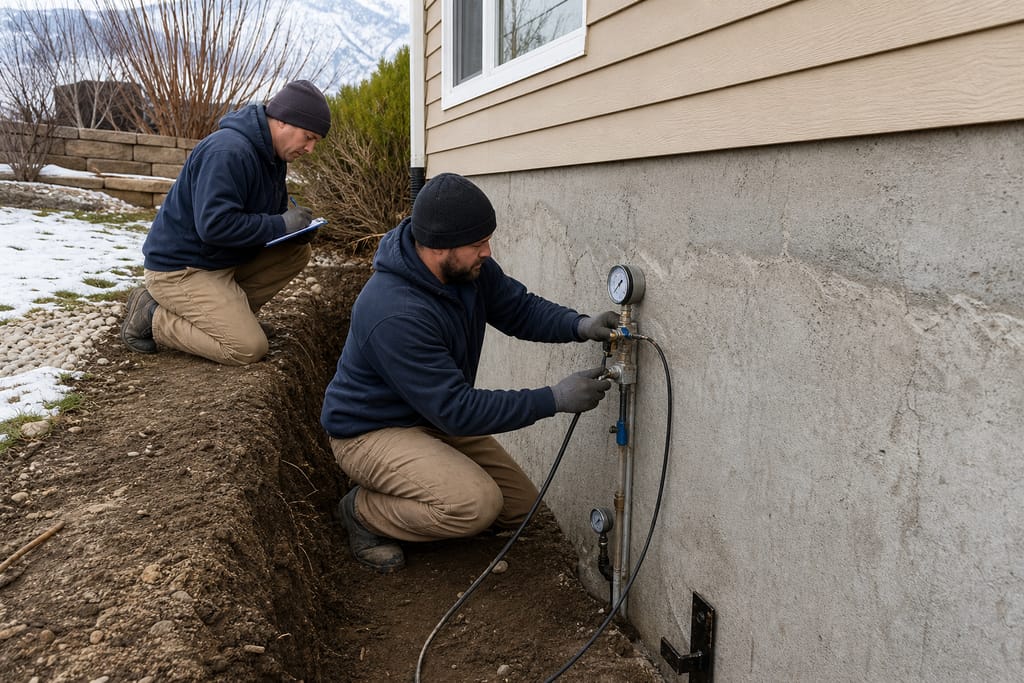
Pressure Assessment
Soil and hydrostatic pressure contributing to wall movement are evaluated.
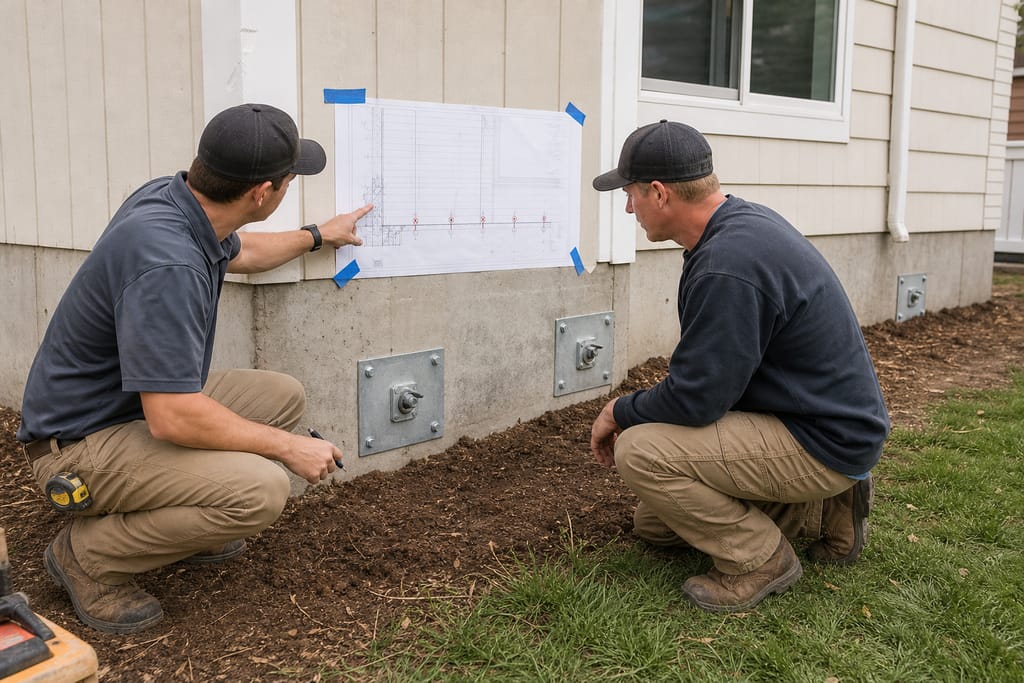 Step 3
Reinforcement Planning
A stabilization method is selected based on wall condition and severity.
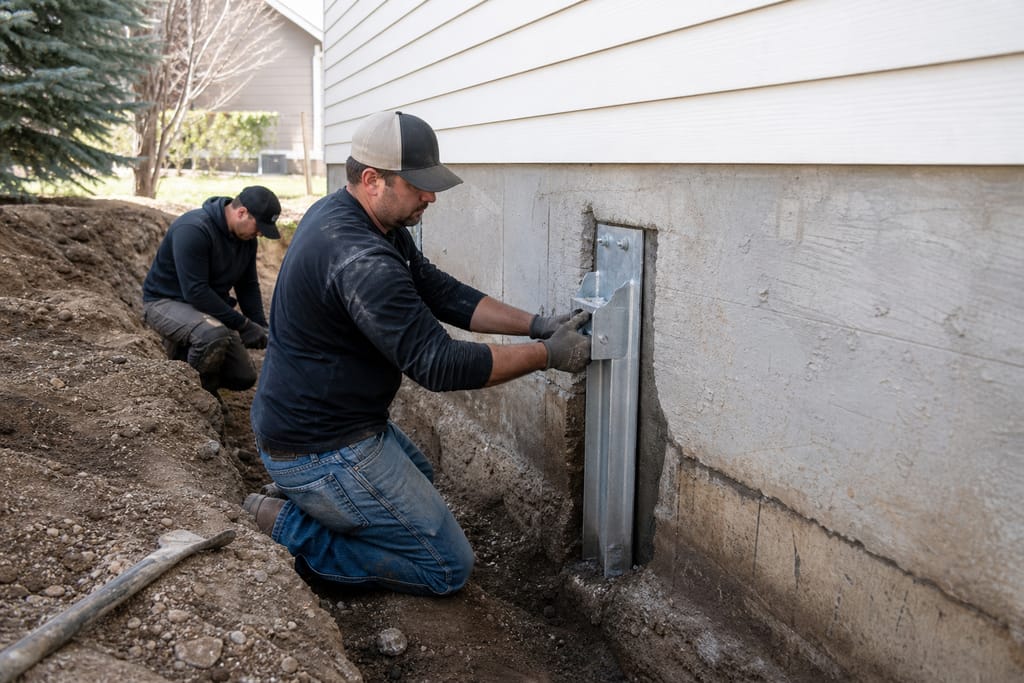 Step 4
Anchor Or Brace Installation
Support systems are installed to halt further wall movement.
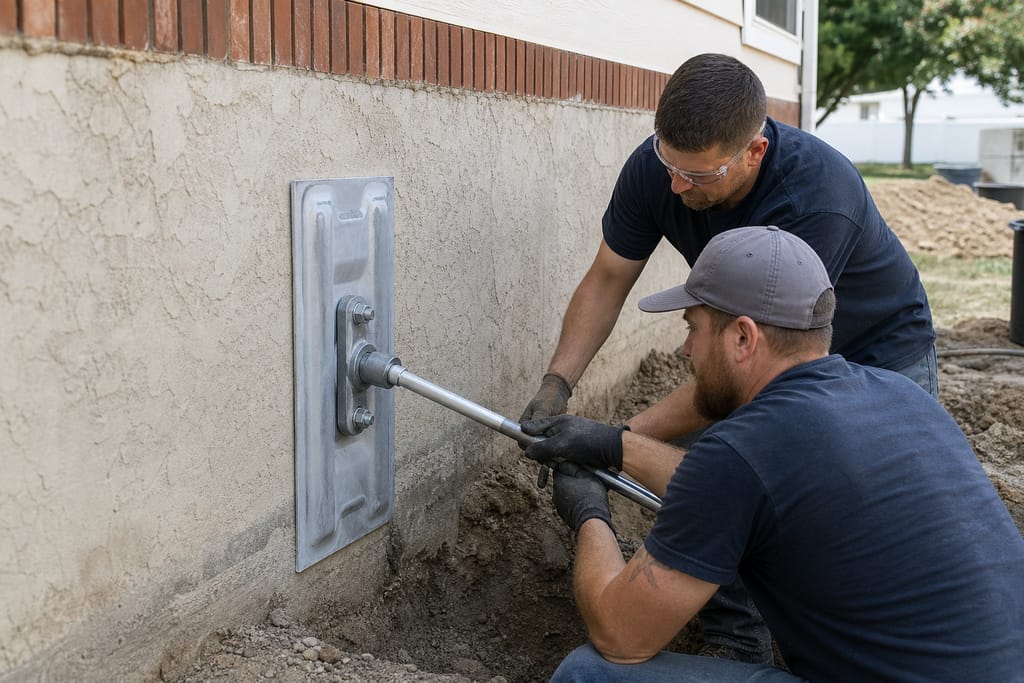 Step 5
Tensioning Adjustment
Anchors or braces are tightened to gradually stabilize the wall.
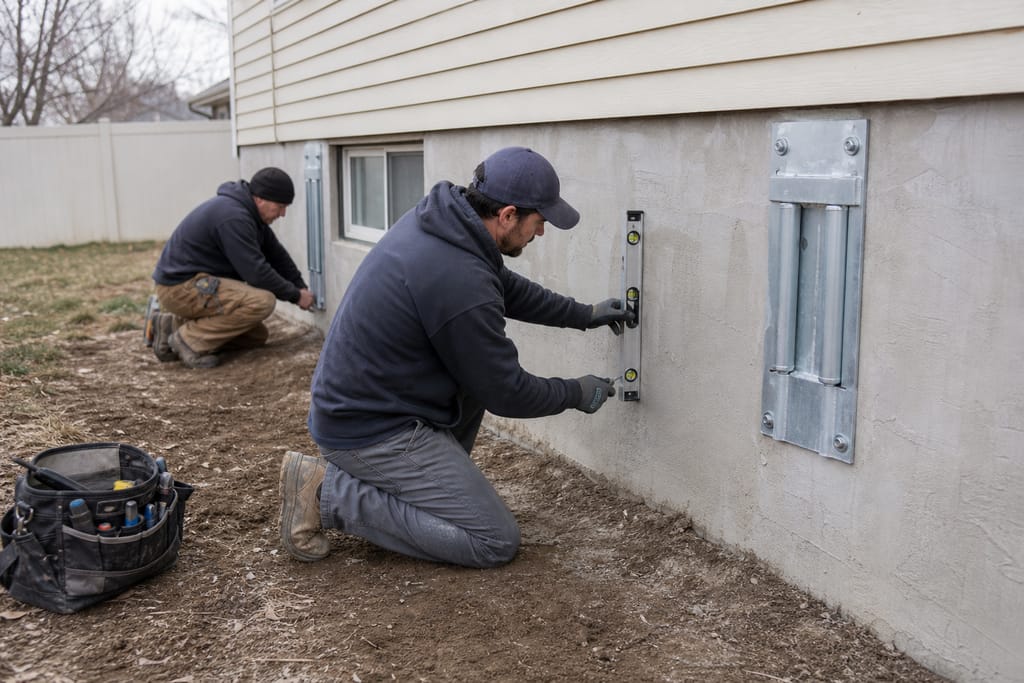 Step 6
Final Inspection
The wall is rechecked to confirm stability and proper installation.
Materials
Materials and methods for Wall Stabilization
The right material depends on how far the wall has already bowed and whether yard access is available for anchors.
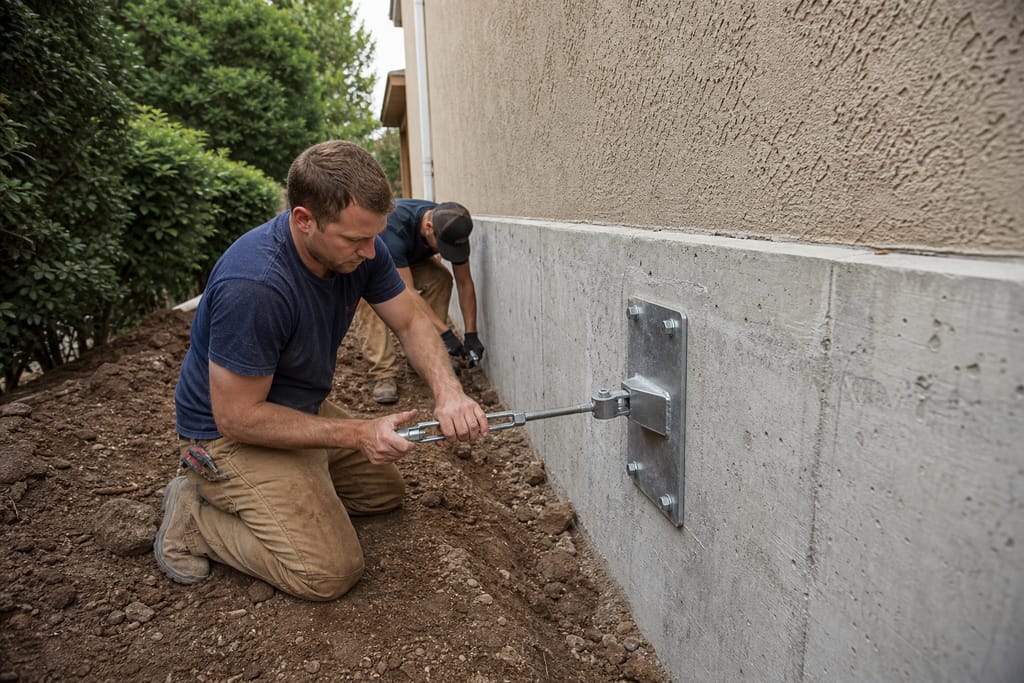
Wall Anchors
Installed in the yard to counteract inward wall pressure, well suited where spring snowmelt saturates clay soil outside the foundation.
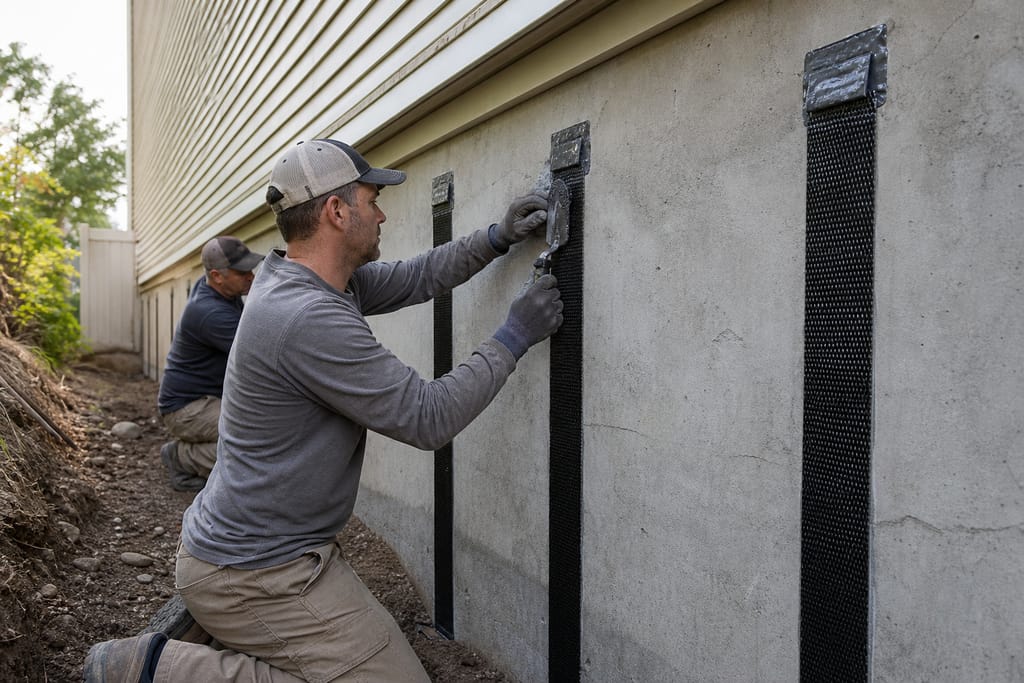
Carbon Fiber Straps
Reinforce walls without requiring extensive excavation, a good fit when yard access is limited.
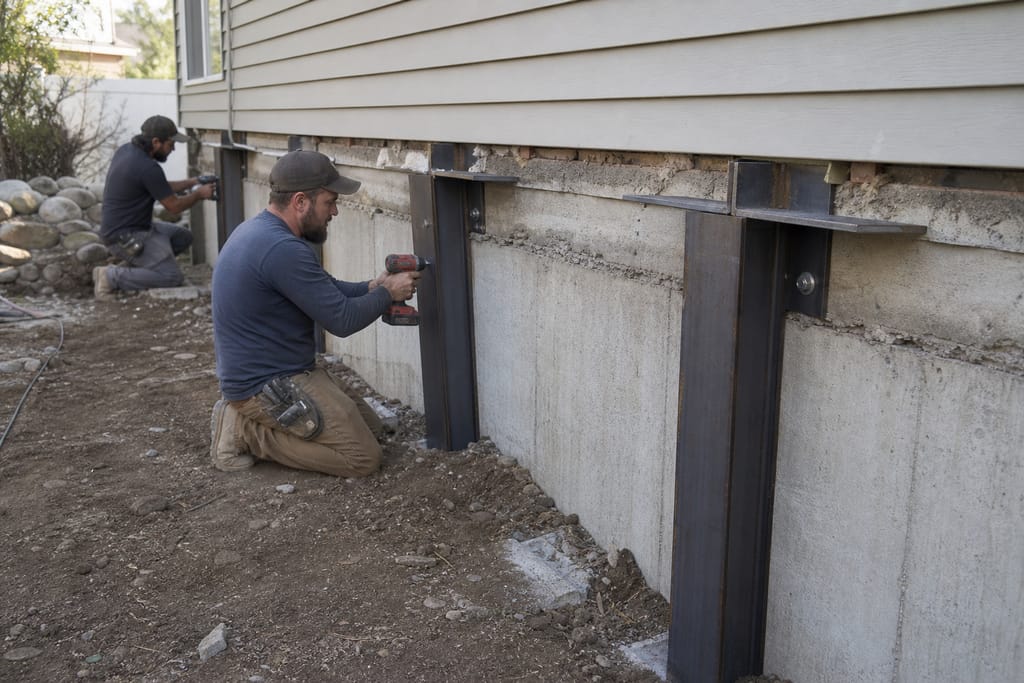
Steel I-Beams
Provide rigid bracing against lateral wall movement for walls that have already bowed significantly.
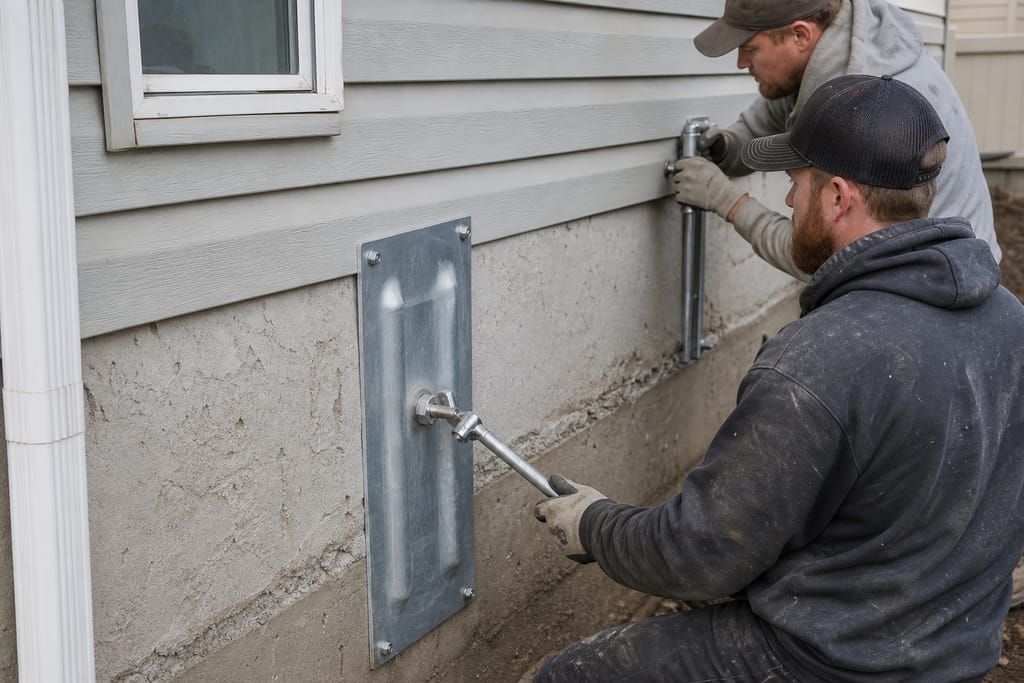
Wall Plates
Distribute anchor tension evenly across the wall surface to prevent point-loading.
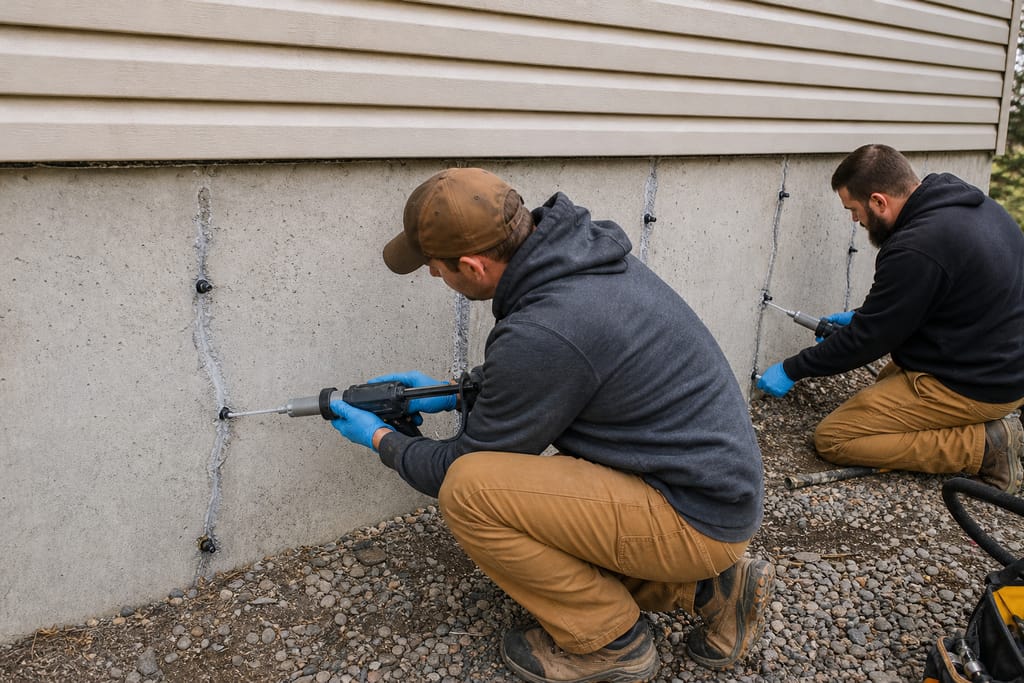
Epoxy Crack Filler
Seals cracks before reinforcement materials are applied so moisture doesn't keep working behind the repair.
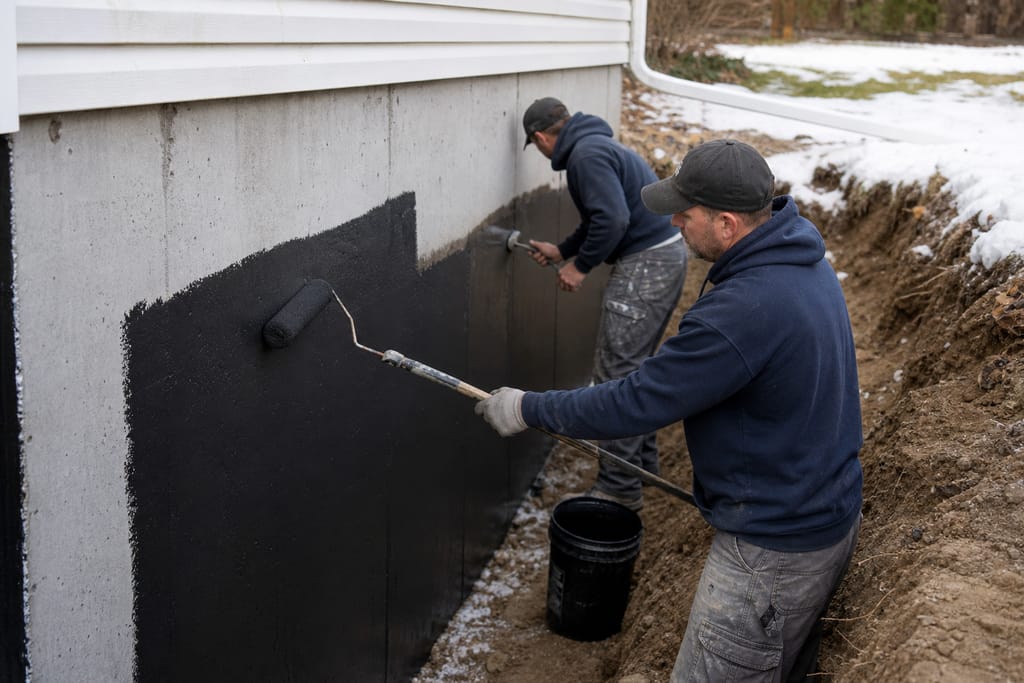
Moisture Barrier Coating
Helps protect reinforced walls from future water damage tied to seasonal groundwater.
Questions on materials?
Get a Free EstimateTimeline
How long does a Wall Stabilization take?
Most wall stabilization jobs are a focused one or two day install. Tensioning sometimes gets adjusted gradually over following weeks.
- 01
Consult and assessment
same day - 02
Permit filing
1 weekabout
- 03
Anchor or brace installation
1–2 days - 04
Follow-up tension check
30 dayswithin
Need a schedule that fits?
Get a Free EstimateCodes & permits
Permits and codes for Wall Stabilization
Structural wall bracing typically falls under Salt Lake County permitting. Confirm with the county before anchors or braces go in.
| Typically needs a permit | Often no permit |
|---|---|
| Steel I-beam bracing installed against a load-bearing wall | Epoxy crack sealing performed without structural reinforcement |
| Wall anchor systems requiring yard excavation | Moisture barrier coating applied after stabilization |
| Any structural reinforcement altering the wall's original support | — |
Need help with permits?
Get a Free EstimateDIY vs pro
DIY vs hiring a pro for Wall Stabilization
| DIY | Hire a pro |
|---|---|
| Monitoring wall bow with a tape measure or string line over time | Installing wall anchors, carbon fiber straps, or I-beam bracing |
| Managing yard grading and gutter extensions to reduce water load against the wall | Any tensioning work meant to pull a bowed wall back toward plumb |
Not sure DIY vs pro?
Get a Free EstimateWhen to call
When to call for Wall Stabilization
Call (385) 557-8453 for a free estimate if you're seeing any of these.
- Visible bow in a basement wall, even a half inch
- Horizontal or stair-step cracking across a block or poured wall
- Water seeping through the wall itself, not just the floor
- A wall that's noticeably worse than it looked a year ago
Seeing warning signs?
Get a Free EstimateFAQs
Wall Stabilization FAQs
How much does it cost to fix a bowing basement wall in Utah?
Cost depends on how far the wall has bowed and the method needed. Carbon fiber straps on an early-stage bow cost less than steel I-beam bracing on a wall that's moved significantly.
Why is my basement wall bowing after spring runoff?
Snowmelt saturates the clay soil against the foundation, building hydrostatic pressure that pushes the wall inward over time. It's a seasonal pattern common across the valley.
Can a bowed wall be pushed back to plumb?
Early-stage bowing can often be partially corrected with gradual anchor tensioning. Severely bowed walls are stabilized to stop further movement rather than fully straightened.
Is wall stabilization the same as foundation crack repair?
No. Crack repair seals an opening in the wall. Wall stabilization addresses structural movement of the wall itself. Both are often needed together.
How do I know if my wall needs anchors or carbon fiber straps?
It comes down to how much the wall has already bowed and whether there's yard space for anchor installation. We measure and recommend based on both.
Will wall stabilization stop water from coming through the wall?
Reinforcement stops movement, not water. We pair it with crack sealing or a moisture barrier coating when water intrusion is also a concern.
Next step
Get a Wall Stabilization estimate in Midvale
Call (385) 557-8453 or request a free estimate. We'll measure the bow and tell you straight whether anchors or bracing fit your wall.
More services
Other Foundation Repair services
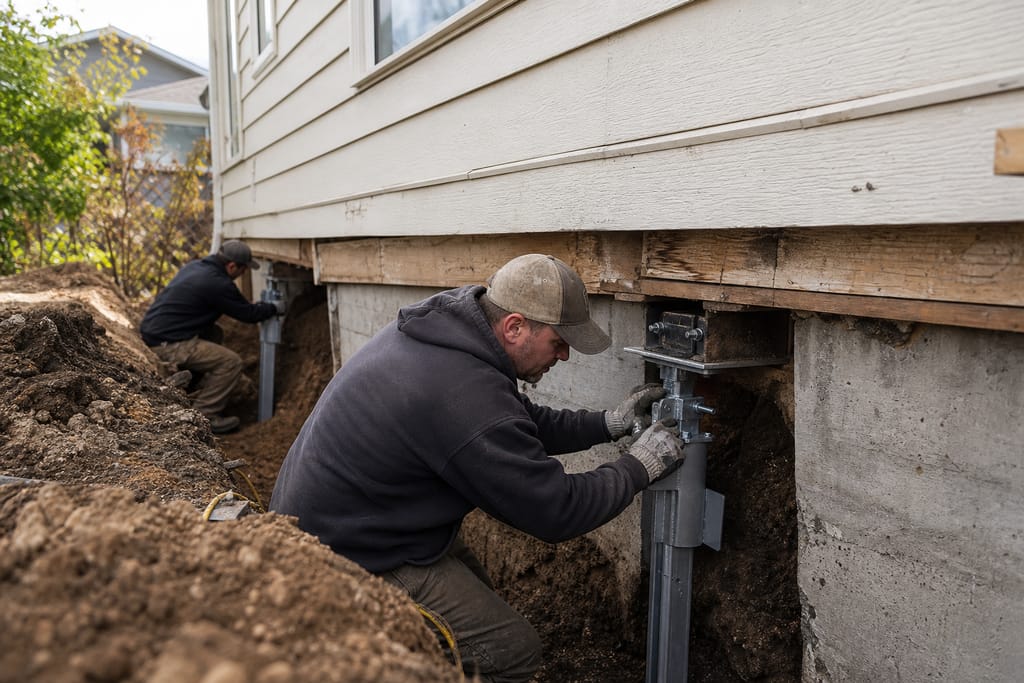
Foundation Repair
Foundation repair in Midvale, UT: crack injection, piering, and wall stabilization with free estimates and written scope.
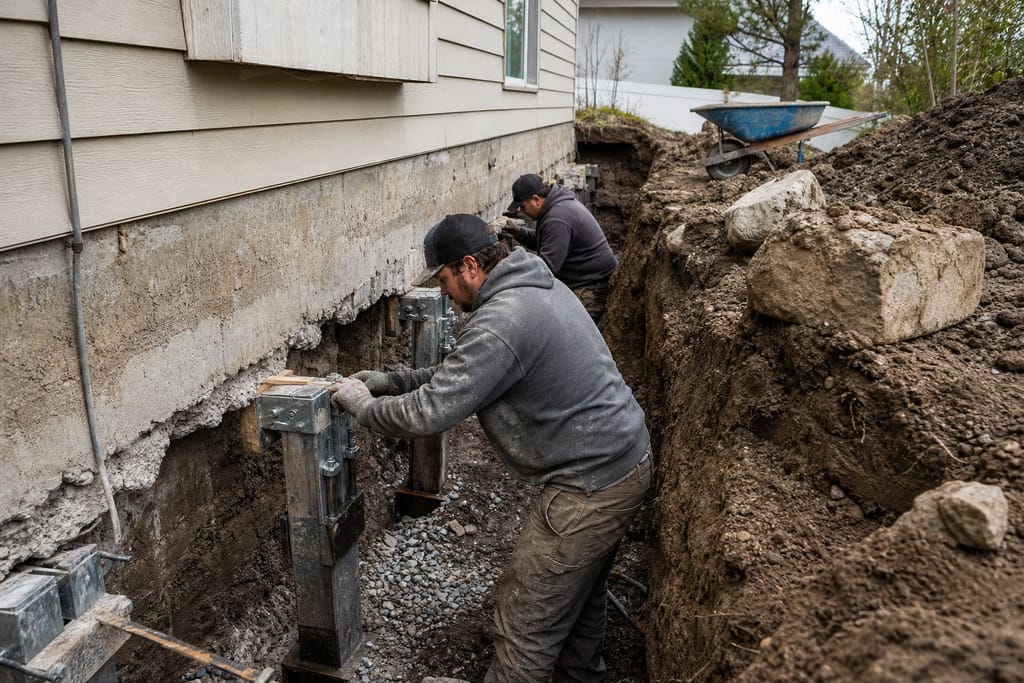
Piering And Underpinning
Piering and underpinning in Midvale, UT: helical and steel push piers driven to load-bearing soil. Free estimates, written scope before any drilling.
Foundation Crack Repair
Foundation crack repair in Midvale, UT: epoxy and polyurethane injection for hairline and structural cracks. Same-day repair, free estimates.
Ask about Wall Stabilization
Tell us about the project and how to reach you.